
Creating an Entrepreneurial Small Business
Subtopic:
Business / Business Enterprise

Define business / business enterprise
Encompasses a broad range of actions involved in creating, distributing, and trading items or services for financial gain.
Can describe:
An individual’s regular job or profession.
An organization engaged in commercial, industrial, or professional activities.
The structured efforts of people to produce and sell items or services.
BUSINESS STARTUPS
Entrepreneurs have various options for launching a business. Several methods include:
Starting from Scratch: Building a business entirely anew.
Involves creating a business from the ground up.
Requires assembling all necessary resources to begin operations.
Often chosen for small businesses aiming for expansion.
Inheriting an Existing Business: Taking over a business from family or relatives.
Offers an initial advantage with an established customer base and workforce.
Example: A family business passed down through generations.
Buying an Existing Business: Purchasing a business from its current owner.
Allows immediate market entry, potentially acquiring businesses with existing infrastructure.
Provides ready-made facilities and operational processes.
Franchise: Operating under an established brand’s license.
Franchisee utilizes the brand, operational systems, and pays fees to the parent company (franchisor).
Requires aligning the business with the franchisor’s model.
Example: Branch locations of well-known banks or fast-food chains.
Business Incubation: Utilizing support facilities for new ventures.
Established organizations or agencies offer resources, training, and operational support to help startups launch.
Helps new entrepreneurs overcome initial obstacles and gain access to essential tools and space.
Examples: Programs providing resources and mentorship for early-stage businesses.
Features of a Business:
Exchange of Goods and Services: Involves trading products or services for money or equivalent value. This exchange is central to business transactions.
Deals in Numerous Transactions: Characterized by regular and repeated exchanges, not just occasional sales. Ongoing transactions define business activity.
Profit as Primary Objective: Driven by the goal of generating revenue that exceeds costs. Profit is the financial reward for the business owner’s efforts.
Business Skills for Success: Requires specific abilities and qualities for effective operation. Expertise, knowledge, and sound decision-making are crucial in business.
Risks and Uncertainties: Exposed to various potential losses and unpredictable market factors. Some risks can be insured, while others are inherent business challenges.
Buyer and Seller Interaction: Each business transaction involves at least two parties: a purchaser and a provider. Business is fundamentally an agreement between these parties for exchange.
Connection with Production: Often linked to the creation of goods or services. Production-related businesses, termed industrial activities, can be primary (resource extraction) or secondary (manufacturing).
Marketing and Distribution Functions: May involve promoting and delivering products to consumers. Commercial activities focus on connecting producers with markets and managing product flow.
Deals in Tangible and Intangible Offerings: Businesses handle both physical products (goods) and non-physical services. Goods can be for direct consumer use or for production. Services are valuable but not physical, like transportation or insurance.
Meeting Human Needs and Wants: Aims to satisfy customer desires and requirements through products and services. Businesses contribute to consumer satisfaction by supplying various commodities.
Social Responsibility Awareness: Increasingly recognizes broader obligations to society. Modern businesses aim for ethical practices, environmental considerations, and community contributions.
Basics of a Business:
Business Concept: Starts with an initial idea or concept that addresses a market need or opportunity. A solid concept is the foundation of a business.
Market Research: May be necessary to assess the concept’s viability and identify the intended customer group. The depth of research varies depending on the business.
Business Name Selection: Choosing a name that is memorable, relevant to the business, and legally available is essential for branding and legal purposes.
Legal Structure Choice: Businesses select from various legal forms like sole proprietorships, partnerships, corporations, or LLCs. Each structure has different legal and tax implications.
Financing: Requires obtaining funds to start and run the business. Funding can come from personal savings, loans, or investments.
Operations Setup: Establishing efficient systems and processes for production, distribution, sales, and customer service is crucial for smooth functioning.
Marketing Strategies: Developing plans to promote products or services and attract customers is vital for business growth and customer acquisition.
Customer Service Provision: Providing excellent support and service is key to building customer loyalty and a positive business reputation.
Financial Management: Managing income, expenses, profits, and cash flow effectively is essential for long-term sustainability and financial health.
Regulatory Compliance: Businesses must operate within legal frameworks, adhering to tax, labor, and industry-specific laws and regulations.
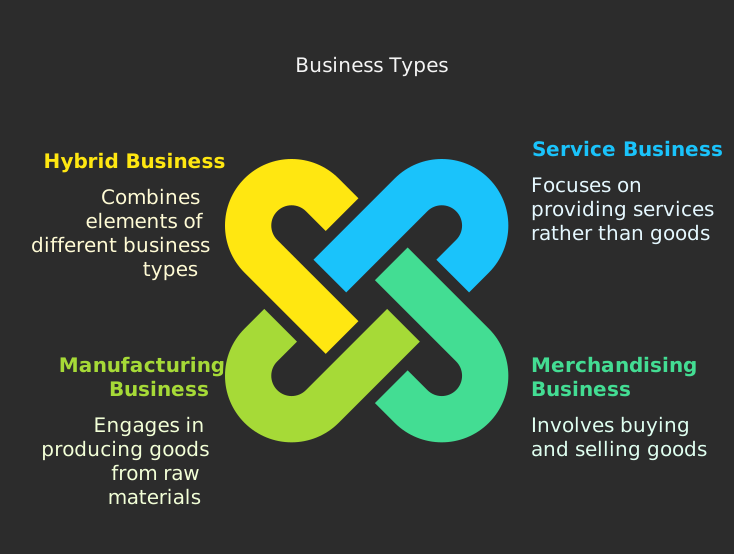
Types of Business
Service Business: Businesses offering non-physical outputs. These are centered around skills, specialized knowledge, and consultative services.
Examples: Hair salons, vehicle repair services, educational institutions, financial institutions, accountancy practices, and legal practices.
Merchandising Business: Businesses focused on retail sales. They acquire goods at lower costs and resell them to consumers at increased prices to generate profit.
Examples: Supermarkets, apparel retailers, and electronics vendors.
Manufacturing Business: Businesses engaged in the creation of finished products from raw materials. This process involves transforming base materials using labor and factory resources into sellable goods.
Examples: Car producers, food manufacturing companies, and medicine production firms.
Hybrid Business: Businesses that incorporate characteristics from multiple business models. For example, a dining establishment offers table service (service aspect), sells meals and drinks (merchandising aspect), and also engages in food preparation from basic ingredients (manufacturing aspect). Hybrid businesses are categorized by their main operational focus.
Entrepreneurial Decisions in Setting up a Business
Choosing the Business Type:
Decide on the core business nature: Manufacturing, Trading, or Service.
Pinpoint the specific products or services to offer and distribute.
Analyze potential profitability and conduct thorough market research.
Determine key aspects like product design, pricing strategy, marketing approaches, and distribution channels.
Risk and Return Evaluation:
Assess the anticipated profit margins in relation to potential business risks.
Verify the technical feasibility of the business operations.
Evaluate if the level of inherent risk is acceptable for the entrepreneur.
Determining Business Scale:
Aim for an optimal business size that minimizes unit costs.
Consider influencing elements: product characteristics, production methods, market reach, available funding, and management skills.
Weigh the advantages and disadvantages of operating at a large versus small scale.
Selecting Business Location:
Choose a geographical area with good access to raw materials, workforce, transportation networks, and financial institutions.
Select a specific site considering land costs, ground stability, and infrastructure development expenses.
Choosing the Ownership Structure:
Decide on the legal form of business: Sole Proprietorship, Partnership, or Joint Stock Company.
Consider factors such as business nature, size, risk exposure, capital needs, and management requirements.
Evaluate the implications of each structure on authority, liability, profit distribution, business continuity, and ease of ownership transfer.
Financial Planning:
Calculate the total capital investment necessary for the business startup and operation.
Decide on the types of financial instruments (e.g., shares, loans) to issue for raising the required capital.
Develop a plan for managing and controlling funds effectively.
Provisioning Physical Resources:
Select essential machinery, equipment, buildings, facilities, and infrastructure.
Consider elements like business type, company size, production process, and available financial resources.
Evaluate factors such as cost-effectiveness, productivity, maintenance and repair services, spare part availability, and required worker skills.
Plant Layout Design:
Strategically arrange physical resources to streamline workflow and reduce operational bottlenecks.
Incorporate flexibility in the layout to accommodate future business changes and adaptations.
Personnel Management:
Estimate the number and skill level of employees needed for various roles.
Conduct human resource planning to forecast future personnel needs.
Implement processes to recruit, select, and train managers and workers with the necessary skills, experience, and aptitude.
Procedural Compliance:
Adhere to all required legal and administrative procedures for establishing a new business.
Register the business with relevant authorities as per regulations.
Obtain all necessary licenses and permits to operate legally.
Business Launch:
Acquire all essential resources: personnel, materials, equipment, funding, and management expertise.
Develop an organizational framework and assign responsibilities.
Establish departments and ensure effective coordination to achieve business goals.

Benefits of a Successful Business to an Entrepreneur
Increased Financial Resources & Investment Capability: A thriving business yields profits for the owner. A portion caters to personal needs, while the remainder allows for reinvestment and business expansion.
Autonomy & Self-Determination: Entrepreneurs gain independence, becoming their own authority. They make autonomous decisions, fostering self-reliance and confidence in their abilities. They can better provide for their personal requirements.
Enhanced Social Standing: A prosperous business and its owner gain respect within the community due to the value of their offerings. This positive image can attract a larger customer base through enhanced reputation.
Improved Quality of Life: Increased earnings from a successful venture enable a higher standard of living. Owners gain access to desired goods and services. Furthermore, successful entrepreneurs can achieve better work-life balance through delegation and enjoy personal time.
Established Identity & Stability: A well-established, successful business offers permanence. This provides a stable base and recognized address for the entrepreneur, the business, and its employees.
Challenges Faced by Business Entrepreneurs
Demanding Time Commitment: Entrepreneurship often entails extended and irregular work hours, potentially leading to fatigue and reduced personal time. This can result in lifestyle limitations due to intense work demands.
Income Instability: Entrepreneurs often face fluctuating income, lacking the consistent paycheck of traditional employment. Financial returns can be uncertain and vary across periods (e.g., monthly, annually).
Initial Lifestyle Adjustments: In the early phases, entrepreneurs might experience a lower standard of living. Reinvesting initial earnings back into the business can limit personal financial comfort during the startup phase.
Risk of Business Failure: There is always a potential for financial loss if the business does not achieve its goals. Invested capital is at risk if the venture is unsuccessful.
Multifaceted Responsibilities: Entrepreneurs must handle a wide array of roles and responsibilities, requiring diverse skill sets and constant adaptation.
Personal Sacrifices Required: Success often demands personal sacrifices, which may include reduced family time, financial constraints, and foregoing immediate personal gratification to ensure long-term business viability.
Factors Leading to Success in a Business
Clearly Defined Goals: Businesses need explicit and well-defined objectives set for specific timeframes. Clear targets are essential for focused effort and achievement.
Owner and Employee Attributes: The personal qualities of the owner, management, and staff are vital. Key traits include diligence, proactiveness, self-assurance, perseverance, and a willingness to seek expert advice from established sources.
Effective Planning Framework: Success requires operating with a robust and detailed plan. Entrepreneurs must develop and diligently implement strategic plans to guide business operations.
Systematic Organization: A well-structured business is crucial. This involves establishing efficient systems, processes, and organizational structures to ensure smooth and effective operations.
Strong Leadership Capability: Effective business owners must be inspiring leaders who can motivate their teams to pursue and achieve organizational objectives through guidance and encouragement.
Sound Financial Management: Proficiency in financial management is key to profitability and long-term sustainability. Entrepreneurs must effectively manage resources to ensure financial health.
Strategic Marketing & Sales Approach: A robust marketing and sales strategy is essential for attracting and retaining customers. Effective strategies drive customer acquisition and loyalty.
Excellent Customer Service Delivery: Providing outstanding customer service is vital for customer satisfaction and repeat business. Satisfied customers are more likely to return and recommend the business.
Commitment to Innovation: Businesses must embrace innovation and continuously seek improvements in their products or services. This helps maintain a competitive edge and adapt to market changes.
Adaptability & Flexibility: Businesses must be flexible and adaptable, able to respond to evolving market conditions and changing customer demands. This agility is critical for survival and continued growth.

Types of Business Records
Financial Statements (Accounting Records):
These records document a company’s financial activities, detailing income, expenses, and owner’s equity.
Governments mandate businesses to maintain financial documents as proof of earnings and expenditures for tax purposes.
Crucial for accurate filing of business income tax returns and demonstrating financial transparency.
Bank Records (Bank Statements):
These are official summaries from financial institutions, showing all transactions and balances across various accounts like savings, investments, and credit lines.
Regularly comparing these statements with internal financial records helps identify and correct any accounting errors.
Essential for verifying the accuracy of internal records and detecting any inconsistencies in financial tracking.
Legal Paperwork (Legal Documents):
The specific legal documents required vary based on the business’s legal structure.
For instance, incorporated entities must maintain their Articles of Incorporation as official establishment documents.
Other possible legal documents include Partnership Agreements, Sole Proprietorship filings, and Limited Liability Company (LLC) operating agreements.
These records serve as official proof of business ownership and legal standing.
Contractual agreements of all types are also considered legally binding documents and must be systematically stored.
Operating Authorizations (Permits and Licenses):
Depending on location and industry, businesses may need specific authorizations to operate legally.
For example, a city permit might be required to ensure business parking complies with local regulations.
Signage permits may be necessary if there are restrictions on business sign dimensions imposed by the city.
Businesses must maintain current and organized records of all necessary permits and licenses.
This documentation demonstrates regulatory compliance and lawful operation.
Protection Policies (Insurance Documents):
Business insurance is often necessary to protect against various potential risks.
General liability insurance can safeguard a business from financial losses due to unforeseen events.
Depending on needs, other insurance types like vehicle or property insurance might be essential.
Proof of insurance coverage is needed to activate policy benefits when claims arise.
For instance, insurance documentation is required to claim damages if a business property suffers fire damage.
Insurance also provides financial protection during legal disputes or liabilities.
Policy documents contain vital details for reporting incidents, such as the policy identification number.
Business Borrowing Records (Business Loans):
If a business has taken out a loan, meticulous tracking is essential. Key details to monitor include:
Original loan amount
Loan approval date
Date funds were received
Scheduled loan repayment completion date
Payment schedules
Changes in interest rates (if applicable, like with variable rate loans)
Advantages of Loan Tracking:
Prevents missed payments and avoids late payment penalties.
Helps in managing financial risks associated with debt.
Increases the likelihood of future loan approvals by demonstrating responsible financial behavior.
Contributes to building a positive business credit history, showing lenders you are a reliable and low-risk borrower.

BUSINESS INSURANCE
Insurance is a system where businesses or individuals contribute to a shared fund. This fund is designed to provide financial support to those who experience specific, covered losses.
Principles of Insurance
Insurable Interest: The insured must have a genuine financial stake in what they are insuring.
It’s not about insuring the physical item itself, but the financial interest in its well-being.
If the insured were to experience damage or loss to the insured item or business, they must demonstrably suffer a financial disadvantage.
Utmost Good Faith: Honesty and transparency are paramount.
The insurance applicant is obligated to truthfully disclose all relevant and significant details regarding the insured asset or business.
This includes any factor that could potentially increase the likelihood or severity of a loss.
Full disclosure allows the insurer to accurately calculate premiums and determine the appropriateness of providing insurance coverage.
Principle of Indemnity: Insurance is about restoring, not profiting.
Insurance aims to return the insured to the financial position they were in immediately before the insured event occurred, not to generate a gain.
Compensation will be limited to the actual monetary value of the damaged or destroyed property or business.
Insurers will not compensate for potential lost profits that might have been earned had the loss not happened.
Principle of Subrogation: Insurer’s rights after claim settlement.
In cases of complete loss, once the insurer has paid out the full claim, they inherit any rights the insured had concerning the lost property.
Effectively, if the insurer pays for the loss, they can then take action against a responsible third party who caused the damage to recover their costs.
Principle of Proximate Cause (Doctrine of Proximate Cause): Direct link between cause and insured risk is necessary.
For a claim to be valid, a reasonably direct and clear causal link must exist between the specific insured risk and the actual cause of the loss.
Note:
Insured: The party (individual or business) seeking insurance protection against specific risks.
Insurer: The insurance company providing the coverage and protection against defined risks.
Importances of Insurance:
Peace of Mind: Provides entrepreneurs with a sense of security, knowing their business is financially shielded from potential disasters.
Boosted Confidence: Encourages business owners to pursue opportunities and take calculated risks, knowing they have a safety net.
Loan Collateral: Insurance policies can serve as acceptable security when entrepreneurs seek loans from financial institutions, enhancing borrowing power.
Enhanced Customer Trust: Customers gain confidence in businesses that are insured, perceiving them as stable and responsible, which can improve business reputation and attract clientele.

BUSINESS COMPETITIONS
Competition is the rivalry among businesses that offer similar goods or services. Their aim is to boost revenue, profits, and market share.
It is a fundamental force in economics, ultimately benefiting consumers. Businesses are pushed to constantly enhance their offerings and provide competitive pricing.
Types of Competition:
Product and Service Features: Competition based on the characteristics and quality of what is offered.
Example: In solar panels, higher energy efficiency can be a key competitive advantage.
Customer Experience: Competition centered on the non-tangible aspects of products and services.
Example: Exceptional and attentive service in the hospitality industry.
Price-Based: Intense rivalry focused on pricing for comparable products or services.
Businesses with superior offerings may justify premium pricing.
Cost Efficiency: Competition based on achieving lower operating costs per unit.
Lower costs allow a business to offer more competitive prices or reinvest in product enhancement and improved customer service.
Brand Recognition: Competition to build and maintain customer familiarity with a brand.
Customers often prefer known and recognized brands.
Example: Paint brands like Plascon and Sadolin competing for market visibility.
Sales Effectiveness: A highly skilled sales team capable of securing deals can be a significant competitive edge.
Strategic Location: Competition based on advantageous positioning.
Example: Being the only coffee provider in a high-traffic area like an airport.
Technological Advancement & Industry Standards: Fierce competition to establish a dominant technology or industry standard.
Example: The ongoing competition between electric and combustion engine vehicles.
Reputation Building: Competition focused on establishing a strong public image related to reliability, product excellence, and sustainable practices.
Importance of Competition:
Consumer Advantages: Competition benefits consumers by driving businesses to improve offerings and keep prices attractive.
Stimulates Innovation: Competition fuels innovation as businesses seek new and better ways to differentiate themselves and gain advantage.
Enhances Efficiency: Competition promotes operational efficiency as businesses strive to reduce expenses and increase output.
Encourages New Ventures: Competition motivates entrepreneurship as new businesses enter markets to challenge existing players.
Drives Economic Progress: Competition can contribute to overall economic growth as businesses invest in new products, services, and technological advancements.

HANDLING OF COMPETITION
Here are strategic approaches to manage competition in business:
Specialize in a Niche: To effectively tackle competition, establish yourself as an expert in a specific area. Concentrate on expertly fulfilling a particular customer need (or a small set of needs), outperforming rivals in that specific domain.
Leverage Competitors: A smart way to manage competition is by exploring opportunities to transform competitors into collaborators. Recognize that not all competitors target your exact customer base. By understanding competitor specializations, you can build networks and create referral systems, potentially benefiting from each other’s focus.
Learn from Industry Leaders: Analyze strategies employed by larger, established companies. Study their successes and failures to gain insights. Adopting lessons from major players with significant resources and experience can provide fresh perspectives on competitive strategies.
Form Strategic Alliances: Creating synergistic partnerships can be an effective competitive tactic. For instance, a pharmacy could benefit from alliances with nearby medical practices to create mutual referral streams and expand reach.
Focus on Local Market First: To effectively manage competition, start by building a solid reputation and customer loyalty within your immediate local area. Establish a strong local base before expanding to broader markets.
Engage with the Local Community: Active participation in local groups, community projects, and initiatives is crucial. Such involvement enhances community relationships and can be instrumental in shaping a more robust and community-connected business strategy, indirectly strengthening your competitive position.
POSITIVE AND NEGATIVE EFFECTS OF COMPETITION:
Positive Effects:
Drives Innovation: Competition is a catalyst for creativity. In a monopolistic environment, the incentive to improve can be lacking. However, in a competitive market, simply copying others is insufficient for success.
Encourages Beneficial Change: Healthy competition pushes businesses to evolve and differentiate themselves. It necessitates finding unique selling propositions to stand out in a crowded marketplace.
Improves Customer Choice and Satisfaction: Competition expands consumer options, offering a wider array of products and services to choose from, thus enhancing overall customer satisfaction.
Promotes Production Efficiency: Competitive pressure compels businesses to streamline production processes and improve efficiency, leading to increased reliability and potentially better quality control.
Leads to Price Reductions: A key benefit for consumers is that competition often results in lower prices as businesses vie for market share by offering more attractive deals.
Enhances Product Quality: To attract and retain customers in a competitive environment, businesses are motivated to enhance the quality of their products and services.
Negative Effects:
Customer Base Fragmentation: Increased competition means businesses must share the available customer pool, potentially leading to a smaller customer base for each individual business.
Resource Scarcity & Cost Inflation: Competition for limited resources, such as skilled labor, can drive up costs associated with production, potentially impacting profitability.
Potential for Market Consolidation (Monopolies): Intense competition can, paradoxically, lead to the formation of monopolies in the long run. Weaker businesses may struggle to survive, potentially leading to market dominance by fewer, stronger players as competitors are eliminated.

We are a supportive platform dedicated to empowering student nurses and midwives through quality educational resources, career guidance, and a vibrant community. Join us to connect, learn, and grow in your healthcare journey
Quick Links
Our Courses
Legal / Policies
Get in Touch
(+256) 790 036 252
(+256) 748 324 644
Info@nursesonlinediscussion.com
Kampala ,Uganda
© 2026 Nurses online discussion. All Rights Reserved