
Leadership in Healthcare
Subtopic:
Leadership styles / types

Leadership, at its core, is about exerting influence. However, “leadership style” is often understood as the specific way a leader engages with and manages individuals within the context of tasks or objectives. Therefore, we can define it as:
A leadership style is the typical method or manner a person employs to guide a team, implement strategies, and inspire individuals to achieve a defined goal or objective. It reflects a leader’s specific approach to providing direction, executing plans, and motivating their team.
Essentially, leadership style is about how decisions are made within a group or organization. The most effective approach to decision-making will depend on the situation and the desired outcomes. For instance, in urgent scenarios, a leader might need to make a quick decision unilaterally and direct others to implement it immediately. This type of leader-driven decision-making is known as the Authoritarian or Autocratic leadership style.
Back in 1939, psychologist Kurt Lewin and his research team conducted studies to identify different leadership styles. They proposed three primary leadership styles:
Authoritarian (Autocratic) Leadership Style
Participative (Democratic) Leadership Style
Delegative (Laissez-faire) Leadership Style
Building upon broader organizational theories, Max Weber, a prominent German sociologist, also described another distinct leadership approach:
4.Bureaucratic Leadership Style

AUTOCRATIC/AUTHORITARIAN LEADERSHIP STYLE:
Autocratic leadership, also known as authoritarian or dictatorial leadership, is characterized by a leader retaining sole control over decision-making, with minimal input from team members. In this approach, leaders formulate choices based on their own perspectives and judgments, seldom seeking or incorporating advice from their team. It signifies a leadership approach marked by absolute and dictatorial command over a group.
The autocratic style empowers leaders to make decisions unilaterally, without consulting or considering the viewpoints of team members, even when such input could be beneficial. These leaders wield complete authority and enforce their directives on employees. Decisions made by autocratic leaders are typically unchallenged. This leadership model is common in highly structured, hierarchical organizations like police forces, military institutions, and correctional facilities.
Characteristics of Autocratic Leaders:
Work-Centric Over People-Centric: Autocratic leaders prioritize task completion and goal attainment over the well-being and growth of their team members. Their focus is primarily on productivity and efficiency, often at the expense of team relationships and individual development.
Inflexible Standards and Procedures: These leaders establish strict rules and processes for performance, expecting absolute adherence from subordinates. They define precise expectations and closely monitor compliance with their prescribed work methods.
Motivation Through Coercion: Autocratic leaders rely on authority and coercion as primary motivators. They may employ fear, threats of penalties, or disciplinary actions to ensure compliance and achieve desired outcomes. This approach can foster a tense and fear-based work environment.
Centralized Decision-Making Authority: Decision-making is concentrated solely in the hands of the autocratic leader, without involving team members in the process. They maintain complete control over decisions and often exhibit limited confidence in their team’s capabilities or input.
Emphasis on Hierarchical Status: Autocratic leaders reinforce a clear hierarchical structure where they occupy a position of authority and command, while subordinates are expected to follow instructions and comply with directives. This style establishes a strong distinction between the leader (“I”) and the team (“You”).
Top-Down Information Flow: Information dissemination is controlled by autocratic leaders, ensuring it flows primarily from the top of the hierarchy downwards. They may restrict access to information and communication channels, potentially hindering teamwork and innovation.
Resistance to Criticism: Autocratic leaders frequently resist criticism and may discourage or suppress dissenting opinions. They expect unquestioning obedience and may perceive criticism as a challenge to their authority, leading to a stifled environment for open dialogue.
Personality Traits of an Autocratic Leader:
Authoritarian leaders typically display specific personality traits that underpin their leadership style:
Assertive Demeanor: Autocratic leaders possess a firm and assertive personality, demonstrating confidence and decisiveness in their actions and choices.
Goal-Oriented Focus: They prioritize achieving tasks and objectives above employee satisfaction or well-being. Productivity and efficiency are paramount.
Limited Consideration for Employee Needs: Employee interests and opinions are often disregarded, with the primary focus being on task completion, rather than employee perspectives.
Strict Rules and Methods: They establish and enforce rigid standards and procedures, expecting absolute adherence and discouraging deviation from prescribed methods.
Independent Decision-Making: Autocratic leaders make decisions autonomously, without seeking team input, and communicate these decisions as directives to be followed.
Restricted Group Participation: They minimize or completely exclude group involvement in decision-making, preferring to maintain personal control over the process.
Unreceptive to Suggestions: While they might listen to team suggestions, they are not easily swayed by them, typically believing their own approaches are superior.
Distrust and Fear-Based Approach: A lack of trust in subordinates is common, potentially creating an atmosphere of fear and anxiety among team members.
Advantages of Autocratic Leadership:
Rapid Decision Execution: Decisions can be made swiftly as the leader doesn’t need to consult others. This is particularly valuable in urgent situations requiring immediate action.
Highly Productive Environments: By making decisions and issuing clear instructions promptly, autocratic leaders can ensure projects remain productive and are completed efficiently through clear directives and deadlines.
Clear Direction Provision: Employees receive unambiguous instructions, simplifying task execution and objective achievement. Leaders can guide team members struggling with deadlines by breaking down projects and offering structured guidance.
Direct and Efficient Communication: Autocratic leaders facilitate direct communication by providing necessary information, reducing employee reliance on leaders for basic task details and streamlining workplace communication.
Reduced Workplace Uncertainty: Establishing clear rules and norms can reduce employee stress by creating a predictable work environment. The leader’s assumption of responsibility can also lessen pressure on staff, maintaining engagement.
Structured Clarity of Roles: Autocratic leaders clearly define organizational structures and job roles, creating specific work objectives that eliminate ambiguity and help team members understand their responsibilities, improving efficiency.
Effective Crisis Handling: Their capacity for independent decision-making allows autocratic leaders to effectively manage crises and high-pressure situations, providing reassurance to the team during challenging times.
Enhanced Oversight & Efficiency: Close supervision minimizes employee complacency, leading to increased productivity and speed. Underperformance is quickly identified and addressed, potentially improving quality and reducing resource wastage.
Streamlined Policy Creation: Policy implementation is often faster because there are fewer opposing views or group disagreements to navigate.
Disadvantages of Autocratic Leadership:
Diminished Employee Morale: Lack of input and feeling undervalued can significantly lower employee morale. When suggestions are ignored and leaders take sole credit, workforce demotivation can occur.
Employee Dissatisfaction: Individuals seeking autonomy and involvement in decision-making may feel stifled, leading to dissatisfaction and resentment due to a perceived lack of openness to new ideas.
Micromanagement Issues: Autocratic leaders often engage in micromanagement, excessively correcting employees at each step, rather than providing overall objectives. This fosters fear and hinders employee autonomy and development.
Suppression of Creativity: Limited team input and collaboration hinders the emergence of innovative ideas, potentially leading to routine-bound tasks and stifling a creative work environment.
Dependency Creation: This style can create a dependency culture where employees overly rely on the leader for decisions and problem-solving, inhibiting individual growth and leadership development within the team.
One-Way Communication Breakdown: Lack of feedback in communication can cause misunderstandings and communication failures due to the limited dialogue.
Risky Individual Decisions: Sole decision-making by an autocratic leader can be risky in complex environments, potentially leading to flawed judgments without diverse perspectives.
Limited Employee Commitment: Workers may not feel committed to organizational goals if their input is not valued, potentially impacting long-term morale and productivity due to resentment.
Unsuitability for Skilled Teams: This style is ineffective when teams are knowledgeable and require collaboration, as it stifles teamwork and cooperation.
Restricted Freedom and Information Access: Employees often have limited freedom and access to information, hindering their ability to contribute fully and understand the broader context.
Compromised Employee Motivation: Employees’ motivation can be undermined as they lack agency and the ability to exercise their rights and contribute meaningfully.
Reduced Employee Creativity: The style discourages creative thinking and limits the generation of innovative solutions from the team.
Inhibited Individual Growth: It hinders personal development and fails to recognize employee potential, initiative, or foster collaboration.
Lack of Supportive Power: Decisions are made without consultation, potentially lacking broader support, even if technically correct.
Reduced Group Participation: Limited participation can lead to a lack of professional growth, reduced job satisfaction, and decreased commitment to organizational goals.
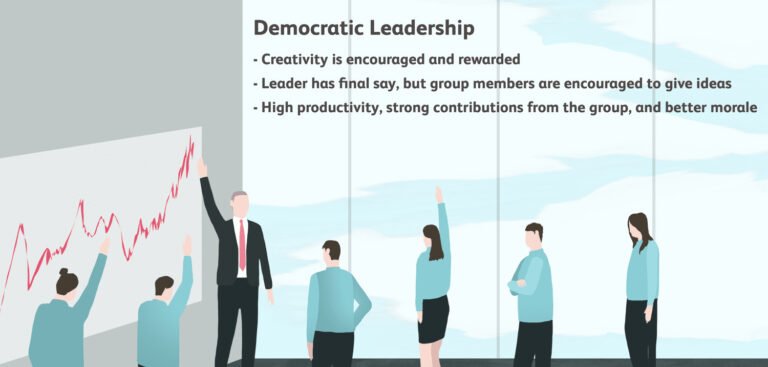
DEMOCRATIC LEADERSHIP/PARTICIPATIVE/CONSULTATIVE
Democratic leadership, also termed participative or consultative leadership, is a style that prioritizes team member involvement in decision-making and encourages active contribution from all group members. It emphasizes shared decision processes.
This style involves the leader incorporating input from one or more employees during the decision-making process, encompassing both what needs to be done and how to accomplish it. Democratic leadership aims to manage using democratic principles such as self-determination, inclusivity, equitable participation, and deliberation.
Crucially, while encouraging participation, the leader retains the final decision-making authority. Employing this style isn’t a weakness but rather a strength, signaling respect for employee contributions which often fosters respect in return.
Characteristics of Democratic Leadership:
People-Oriented Approach: Democratic leaders prioritize the well-being and development of their team, focusing on their individual needs and professional growth.
Emphasis on Team Unity: This style emphasizes togetherness and collaboration, fostering a sense of belonging and shared objectives within the team.
Delegation of Tasks and Responsibility: Democratic leaders delegate tasks and responsibilities to employees, granting them autonomy and ownership of their work, which promotes accountability and empowers team members.
Openness to Feedback: Leaders actively seek and value feedback and suggestions from all levels, including both managers and subordinates, utilizing this input to improve decision-making and management processes.
Collective “We” Mentality: Democratic leadership fosters a collective mindset, emphasizing teamwork and shared responsibility, shifting focus from individual achievements to group success.
Multi-Directional Communication: Communication flows freely in all directions – top-down, bottom-up, and laterally – promoting transparency, collaboration, and effective organizational management.
Advantages of Democratic Leadership Style:
Increased Employee Job Satisfaction: Allowing employees to participate in decisions enhances their job satisfaction and engagement by giving them a voice and sense of ownership.
Fosters Innovation and Creativity: Involving employees in decision-making cultivates a culture of innovation and creative problem-solving by leveraging diverse perspectives and ideas for more inventive solutions.
Builds Trust and Collaboration: Open communication and transparency build trust amongst team members, promoting collaboration and teamwork, which ultimately improves overall performance and team cohesion.
Enhanced Commitment and Morale: When employees feel valued and included, their commitment to their work and overall morale significantly increase, resulting in higher productivity and improved job satisfaction.
Higher Quality Decisions: Incorporating multiple perspectives and ideas leads to better-informed and higher quality decisions. Diverse input helps identify potential weaknesses and encourages more comprehensive critical thinking.
Reduced Communication Barriers: Open dialogue diminishes tension between leaders and teams, enabling open issue resolution and minimizing fear of rejection, fostering trust and effective communication.
Positive Work Environment Creation: Encouraging responsibility and challenge for all team members, including junior staff, cultivates a positive work culture, fostering empowerment and workplace enjoyment, boosting job satisfaction.
Enhanced Cooperation and Teamwork: Democratic leadership intrinsically promotes cooperation and a strong sense of teamwork by involving everyone in decision-making, building a collaborative and supportive atmosphere.
Reduced Employee Turnover: Employee empowerment and performance-based recognition create a sense of value and future security, leading to increased employee loyalty and reduced turnover rates.
Responsibility Delegation: Democratic leaders effectively delegate responsibilities, increasing member participation in decisions, distributing workload, and empowering individuals to take ownership.
Disadvantages of Democratic Leadership Style:
Potential for Reduced Efficiency: Decision-making can become slower as it requires consensus and input from various team members, which can reduce efficiency, especially in time-critical situations.
Challenges in Accountability: Shared decision-making can blur individual accountability for outcomes, potentially leading to diffused responsibility and a lack of clear ownership, which can hinder progress and accountability.
Conflict Management Difficulties: Disagreements and conflicts may arise due to diverse opinions, making conflict resolution and reaching consensus time-consuming and challenging for leaders.
Risk of Inequality: Despite aiming for inclusivity, certain voices or perspectives might be marginalized or overlooked, potentially leading to inequality in the decision-making process.
Decision-Making Delays: The process can be time-consuming, potentially hindering organizational progress due to the need for extensive consultation and consensus-building.
Inconsistent Implementation: Some managers might adopt democratic principles superficially, failing to fully implement the style. This can lead to frustration and disillusionment when input is gathered but not effectively acted upon.
Employee Frustration: When employee suggestions are disregarded in the final decision, those individuals may feel undervalued and frustrated, leading to negative sentiment within the organization.
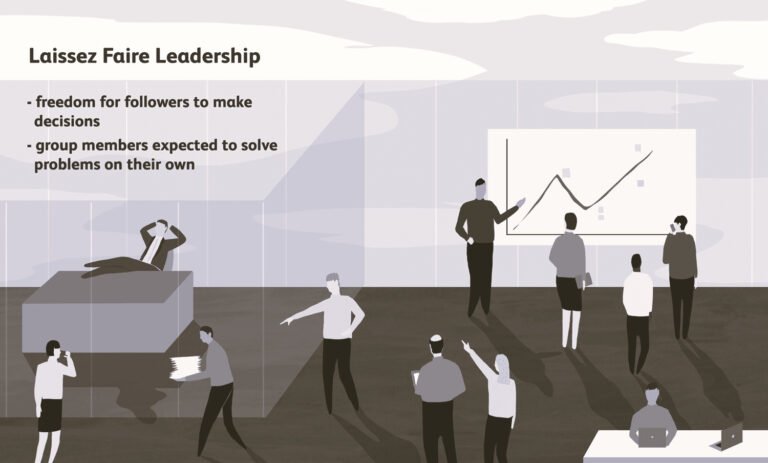
LAISSEZ-FAIRE STYLE / FREE-REIN / ULTRALIBERAL / DELEGATIVE
Laissez-faire leadership is defined by a hands-off management style. Leaders using this approach offer minimal direction, granting significant autonomy to team members in their decision-making processes. It’s important to note that even with this autonomy, the leader retains ultimate accountability for the outcomes of these decisions.
This leadership type emphasizes employee freedom and reduced managerial intervention. Leaders in this style generally take a step back, observing the team’s activities and results rather than actively directing daily operations.
This approach is most effective when team members possess the expertise to self-manage, analyze situations independently, and determine the best course of action. It acknowledges that leaders cannot handle every detail and necessitates prioritization and task delegation.
Laissez-faire is not about avoiding responsibility or shifting blame. Instead, it’s a strategic choice based on trust and confidence in the abilities and judgment of your team.
Characteristics of Laissez-Faire Leadership:
Non-Interventionist Approach: Leaders minimize their direct involvement, offering limited guidance and stepping back from day-to-day management.
Authority Delegation: Responsibility for tasks and decision-making is distributed to team members, empowering them with ownership.
Confidence in Team Competence: Leaders operate with a high level of trust in the skills, knowledge, and capabilities of their team members.
Minimal Direction Provided: Guidance from the leader is kept to a minimum, allowing team members substantial freedom to operate independently.
Team Autonomy: Team members are empowered to make choices independently and take full ownership of their work processes and outcomes.
Infrequent Feedback & Intervention: Leaders typically provide limited feedback and intervene only when absolutely necessary, promoting self-regulation within the team.
Limited Managerial Guidance: Direction from leadership is deliberately kept sparse, encouraging self-reliance within the team.
Extensive Follower Freedom: Team members have considerable latitude in making decisions related to their work and projects.
Resource & Tool Provision: Leaders ensure that team members have access to the necessary tools, resources, and information to perform their tasks effectively.
Self-Directed Problem Solving: Team members are expected to proactively identify and resolve challenges within their work, promoting independent problem-solving skills.
Advantages of Laissez-Faire Leadership:
Leader Focus on Strategic Priorities: By delegating operational details, leaders can concentrate on higher-level strategic goals and overarching organizational direction, allowing them to “steer the ship” effectively while trusting the team with execution.
Enhanced Accountability at All Levels: Granting autonomy fosters a stronger sense of responsibility across the team. Employees become more accountable for their actions and performance, driving ownership of both successes and setbacks.
Boosted Creative Expression: Employees experience greater creative freedom as leaders are less concerned with rigid processes and more focused on results. This allows team members to explore diverse methodologies and tap into their creative potential.
Facilitates Professional Growth: While formal training may not be heavily emphasized, the autonomy to navigate challenges independently accelerates professional development through hands-on experience and self-driven learning.
Creates a Less Pressurized Environment: Laissez-faire leadership fosters a more relaxed and less stressful work environment, contrasting with micromanaged settings. The inherent flexibility promotes a low-pressure atmosphere conducive to employee well-being.
Improved Employee Retention: The combination of autonomy, creative freedom, and a relaxed environment can significantly improve employee satisfaction and loyalty, leading to increased retention rates.
Cultivates Responsibility: This style naturally instills a strong sense of responsibility, particularly among team members who are inherently motivated and self-starting.
Encourages Individual Development: The hands-off approach provides opportunities for employees to actively engage and learn, promoting a growth-oriented environment.
Stimulates Innovation: The freedom afforded to employees can be a catalyst for creativity and the development of innovative solutions, as team members feel empowered to experiment and explore.
Enables Quicker Decision-Making: Autonomy empowers team members to make timely decisions without bureaucratic delays associated with approvals, accelerating project timelines.
Effective for Highly Skilled Teams: This leadership style thrives when team members are experts in their respective fields and capable of independent work and self-management.
Leverages Team Expertise: When team members possess specialized knowledge exceeding that of the leader in certain areas, laissez-faire leadership allows for the full utilization of this deep expertise.
Disadvantages of Laissez-Faire Leadership:
Potential Lack of Direction: Without sufficient guidance, team members may struggle to maintain focus, understand their roles fully, or align efforts effectively, potentially leading to confusion and reduced efficiency.
Reduced Accountability (Paradoxically): While it aims to increase accountability, if not implemented well, the lack of direct oversight can sometimes lead to a decrease in accountability if expectations are not clearly set and monitored, impacting overall productivity.
Compromised Communication Pathways: Limited leader accessibility can impede communication, making it challenging for team members to seek guidance, share critical information, or foster effective team-wide dialogue.
Insufficient Support & Development: Minimal leader intervention can translate to a lack of necessary support and mentorship, potentially hindering employee development and limiting their progression towards becoming high-performing individuals within the organization.
Organizational Structure Ambiguity: The hands-off nature can sometimes create confusion regarding the leadership hierarchy and reporting lines, especially in times of uncertainty or when more directive leadership is needed.
Lower Team Morale Possible: If not balanced with adequate support and recognition, team members might feel unsupported or neglected, potentially lowering overall group morale and job satisfaction.
Decreased Team Productivity Risk: In situations where team members lack sufficient experience, self-discipline, or motivation, the absence of guidance can result in reduced productivity and output.
Potential for Lower Quality Output: Without clear expectations, quality standards, and leader feedback, the quality of work produced by team members may decline.
Unfinished or Abandoned Tasks: Vague roles, unclear responsibilities, and lack of follow-up can sometimes result in tasks being overlooked, incomplete, or falling through the cracks.

BUREAUCRATIC LEADERSHIP STYLE
Bureaucratic leadership is characterized by a structured, rule-following approach. This style emphasizes a clear hierarchy and strict adherence to established regulations and procedures. Decision-making follows a defined chain of command, aiming for systematic processes and maintaining order. It’s often referred to as a rule-based or procedural leadership.
Characteristics of Bureaucratic Leadership:
Hierarchical Structure: Emphasizes a formal, defined hierarchy with established protocols between different levels of staff and departments. This setup aims to streamline workflows and standardize decision processes.
Role Specialization: Managerial roles are specifically assigned to individuals based on their competence and experience. Employees are expected to possess deep expertise within their assigned area or department.
Defined Responsibilities: Every member adheres to a set of rules and guidelines. Tasks and operational frameworks are assigned by superiors, ensuring clarity in daily responsibilities and role understanding.
Impersonal Approach: Focus is on the overall efficiency of management systems rather than individual recognition. Uniformity is prioritized, and impartial treatment is emphasized across all personnel.
Professional Conduct: Bureaucratic leadership promotes professionalism through objective decision-making and consistent treatment of all employees. Standards are upheld, and fairness is applied regardless of position.
Advantages of Bureaucratic Leadership:
Clarity in Roles and Expectations: Provides well-defined guidelines for every position, enhancing employee understanding of duties and promoting organizational stability through clear expectations.
Job Security Focus: Offers potential for long-term job security. Adhering to organizational rules and demonstrating strong performance can lead to career progression within the established system.
Channels Creativity Effectively: Directs creative and innovative processes towards designated teams. It can encourage innovation in management techniques and a focus on consumer understanding and results-driven strategies within defined channels.
Disadvantages of Bureaucratic Leadership:
Inhibition of Innovation: Rigid structures and rule-based operations can restrict creativity and the exploration of new ideas, as adherence to protocol may overshadow innovative thinking.
Slowed Decision Processes: Hierarchical approval systems and chain of command can delay decision-making, as approvals often need to pass through multiple levels, hindering quick responses to changing situations.
Resistance to Adaptability: Emphasis on established rules can create resistance to change and new approaches. This inflexibility can impede the organization’s ability to adapt to new challenges or capitalize on emerging opportunities.
FACTORS THAT INFLUENCE LEADERSHIP STYLE
Leadership style is not static but is shaped by various elements related to the leader, team, organization, and external environment.
Manager’s Personal Background:
Personality Traits: Individual traits like assertiveness, empathy, and decisiveness naturally shape a leader’s approach.
Knowledge and Skillset: Proficiency in areas such as communication, problem-solving, and strategic thinking directly impacts leadership methods.
Core Values and Ethics: Personal ethical principles and values strongly guide leadership behavior and decision-making philosophies.
Life and Professional Experiences: Past experiences, both within and outside of work, mold a leader’s perspective and adaptability in handling diverse situations.
Staff Being Supervised:
Individual Team Member Differences: Leadership approaches must be adapted to the unique skills, motivation levels, and communication styles of individual team members.
Developmental Needs of Staff: Leadership style is adjusted based on staff development stages, providing more guidance to less experienced individuals and more autonomy to seasoned professionals.
Organizational Factors:
Organizational Culture: Established norms, values, and organizational priorities significantly shape the leadership styles that are deemed appropriate and effective within that specific context.
Organizational Structure: The degree of hierarchy and distribution of authority within the organization’s structure influences the typical leadership styles employed by managers.
Organizational Objectives and Priorities: Strategic goals and immediate priorities of the organization dictate which leadership styles are most effective in driving the organization forward.
External Factors:
Economic and Political Landscape: Broader economic conditions and political stability can lead leaders to adopt more cautious or aggressive strategies, influencing their leadership approach.
Technological Advancements: The pace of technological change requires leaders to adapt, integrate new technologies, and adjust their leadership to leverage digital tools effectively.
Industry and Market Dynamics: Competitive pressures, shifting market demands, and industry trends necessitate that leaders modify their styles to maintain relevance and effectiveness within their specific sector.
LEVELS OF LEADERSHIP IN ORGANIZATIONS
Leadership operates across different levels within an organization, each with distinct characteristics and focus.
Direct Level:
Characterized by face-to-face interaction between leaders and team members.
Leaders are regularly present and visible, fostering close relationships.
Emphasis on proximity and frequent communication, creating a direct connection with the team.
Common in settings where leaders are physically accessible and actively involved in daily team operations.
Organizational Level:
Leaders extend their reach beyond immediate teams to engage with wider organizational operations.
Involves leaders visiting different departments and locations to gain a comprehensive understanding of the organization.
Focus is on overseeing the overall functioning of the organization and ensuring alignment with strategic objectives.
Leaders at this level manage across broader units, ensuring cohesive organizational performance.
Strategic Level:
Typically held by senior leadership, such as top executives or ministry-level officials.
Responsible for defining the overall strategic direction and long-term vision of the organization.
Focuses on high-level decision-making that shapes the future and sustainability of the organization.
Impact extends beyond the organization itself, often influencing industry or sector-wide trends and policies.
DUTIES AND RESPONSIBILITIES OF A HEAD NURSE
Head nurses are pivotal in healthcare settings, leading and coordinating nursing teams to ensure high-quality patient care and efficient operations.
Team Management: Supervise and lead nursing teams within a unit or facility. Monitor team performance, ensure job duties are fulfilled, and coordinate nursing activities.
Resource Allocation: Strategically manage and distribute resources (staff, medication, equipment) to meet patient care needs effectively. Ensure optimal resource availability and coordination within the nursing unit.
Administrative Oversight: Manage administrative tasks including patient records, paperwork for doctors, and potentially patient billing information. Maintain computer proficiency and utilize medical terminology effectively in documentation.
Effective Communication: Maintain robust communication channels with management, specialist physicians, and external facilities for specialized patient care needs. Communicate treatment plans effectively with patients and families.
Hiring and Training: Participate actively in recruitment processes, including screening applicants, conducting interviews, and making hiring decisions. Oversee onboarding and training of new nurses, and recommend ongoing professional development as needed.
Maintaining Working Relationships: Manage staff schedules, payroll processes, and address workplace conflicts to foster a positive and productive team environment.
DUTIES AND RESPONSIBILITIES OF A STAFF NURSE
Staff nurses are at the forefront of patient care, directly delivering nursing services and ensuring patient well-being according to established care plans.
Direct Patient Care: Provide hands-on nursing care as outlined in medical and nursing plans, addressing patients’ physical, emotional, and spiritual needs directly.
Observation and Reporting: Closely monitor patient conditions, accurately record observations, and promptly report changes or symptoms to physicians. Implement nursing procedures and meticulously document all actions in patient records.
Patient Education: Educate patients and their families on self-care techniques, rehabilitation strategies, and health management practices, providing both physical and emotional guidance.
Nurse-Patient Relationship Development: Cultivate professional, empathetic, and supportive relationships with patients. Ensure patient comfort, safety, and emotional well-being throughout their care.
Participation in Care Procedures: Actively engage in nursing procedures and contribute to comprehensive patient care delivery. Adhere to established protocols and best practices to ensure high standards of care.

We are a supportive platform dedicated to empowering student nurses and midwives through quality educational resources, career guidance, and a vibrant community. Join us to connect, learn, and grow in your healthcare journey
Quick Links
Our Courses
Legal / Policies
Get in Touch
(+256) 790 036 252
(+256) 748 324 644
Info@nursesonlinediscussion.com
Kampala ,Uganda
© 2026 Nurses online discussion. All Rights Reserved