
Gynaecology
Breast cancer
Table of Contents
Introduction
Breast cancer is one of the most common cancers affecting women.
It occurs when breast cells mutate and become cancerous, multiplying and forming tumors.
It typically affects women over 50 years of age, though it can also occur in younger women and, in some cases, men.
About 80% of breast cancer cases are invasive, meaning the tumor may spread from the breast to other parts of the body.
Breast cancer is a malignant tumor that starts in the cells of the breast.
A malignant tumor is a group of cancer cells that can grow into (invade) surrounding tissues or spread (metastasize) to distant areas of the body.
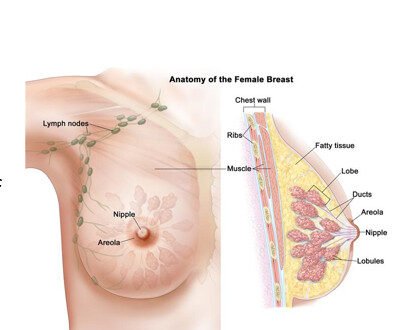
It most commonly arises from the inner lining of the milk ducts or the lobules that supply the ducts with milk.
Cancers originating from the ducts are called ductal carcinomas.
Cancers originating from the lobules are called lobular carcinomas.
Types of Breast Cancer
There are several types of breast cancer:
Ductal Carcinoma In Situ (DCIS)
Invasive Ductal Carcinoma (IDC)
Inflammatory Breast Cancer
Metastatic Breast Cancer
Other specific types
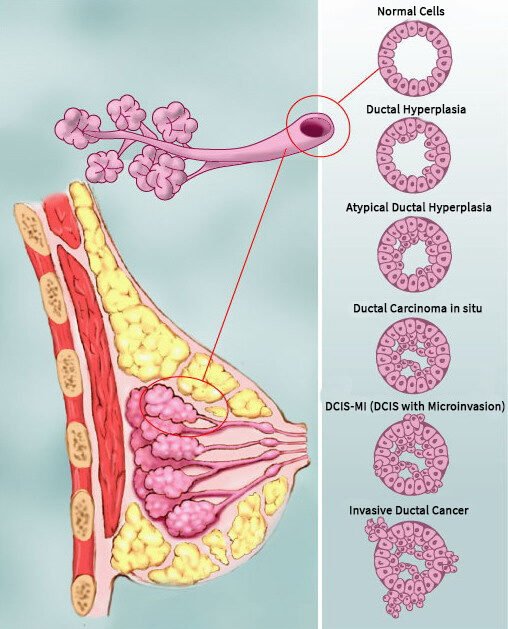
1. Ductal Carcinoma In Situ (DCIS)
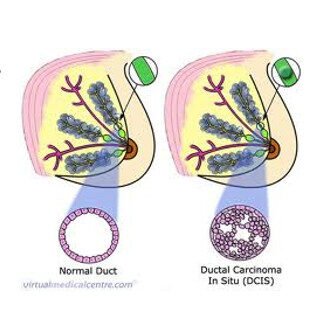
DCIS is a non-invasive breast cancer in which abnormal cells are found in the lining of the breast milk ducts.
These atypical cells have not spread outside the ducts into surrounding breast tissue.
DCIS is an early form of breast cancer and is highly treatable.
However, if left untreated or undetected, it can spread into the surrounding breast tissue.
2. Invasive Ductal Carcinoma (IDC)
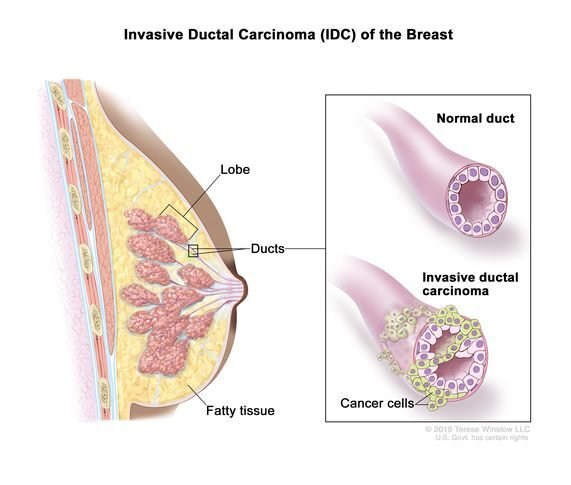
IDC occurs when abnormal cancer cells that began forming in the milk ducts have spread beyond the ducts into other parts of the breast tissue.
IDC is the most common type of breast cancer, accounting for 70–80% of all breast cancer diagnoses.
It is also the most common type of breast cancer found in men.
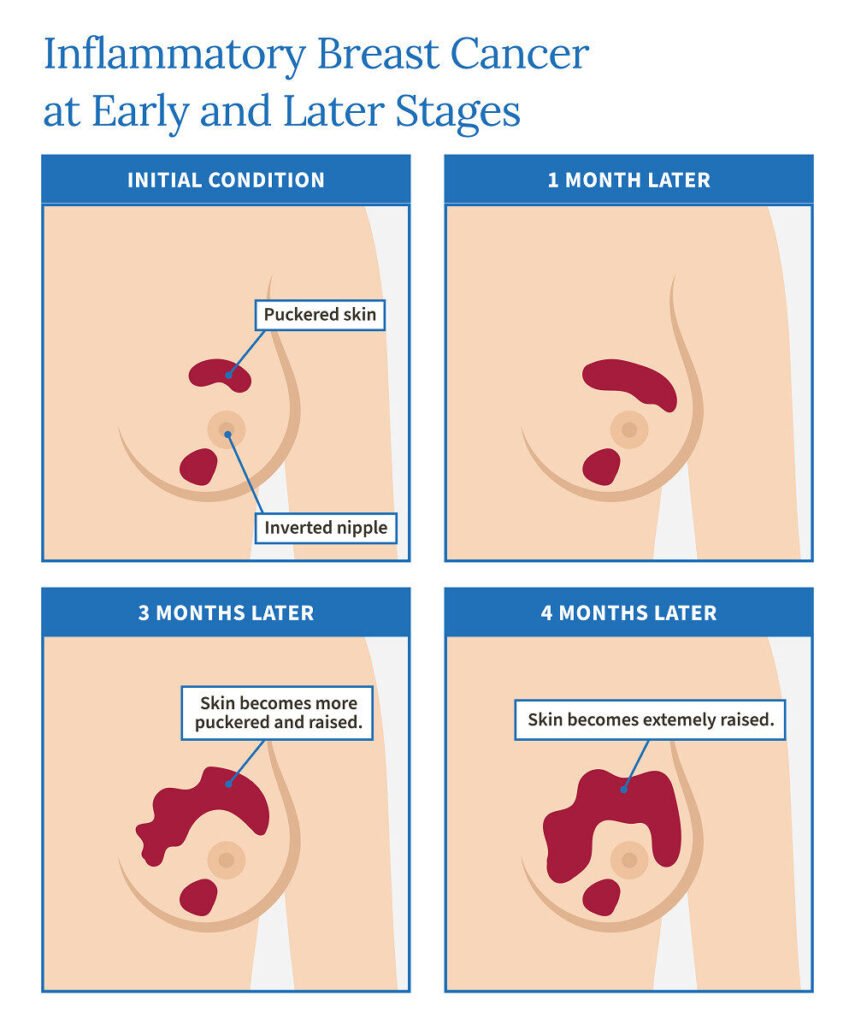
3. Inflammatory Breast Cancer (IBC)
Inflammatory Breast Cancer is an aggressive and fast-growing form of breast cancer.
In this type, cancer cells infiltrate the skin and lymph vessels of the breast.
It often produces no distinct tumor or lump that can be felt within the breast.
When the lymph vessels become blocked by cancer cells, symptoms begin to appear.
4. Metastatic Breast Cancer
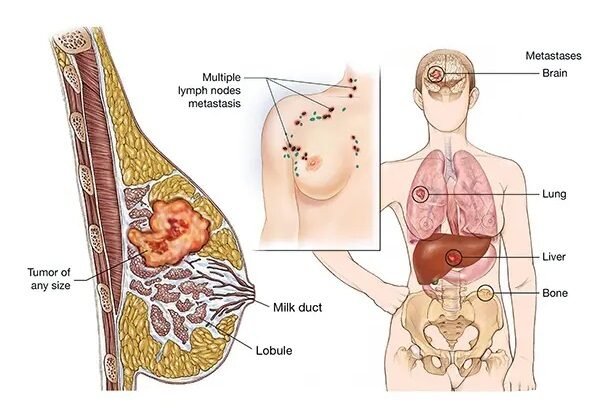
Metastatic breast cancer occurs when the cancer has spread to other parts of the body.
The common sites of metastasis include the lungs, liver, bones, and brain.
Etiology
Breast cancer is always caused by damage to a cell’s DNA.
Women are at a higher risk than men.
A number of risk factors are associated with the development of cancerous breast cells.
Risk Factors
Gender
Age
Genetic risk factors
Family history
Personal history of breast cancer
Menstrual history
Having children (parity)
Birth control
Breastfeeding
Gender
Being a woman is the main risk for developing breast cancer.
While men can also develop breast cancer, it is 100 times more common in women.
Age
The risk of breast cancer increases with age.
About two-thirds of women with invasive breast cancer are 55 years or older at the time of diagnosis.
Genetic Risk Factors
About 5–10% of breast cancers are linked to inherited genetic mutations, particularly in the BRCA1 and BRCA2 genes.
Women with these mutations have up to an 80% lifetime risk of developing breast cancer.
Family History
The risk of breast cancer is higher among women whose close blood relatives have had the disease.
Relatives on either the mother’s or father’s side can contribute to risk.
Having a mother, sister, or daughter with breast cancer approximately doubles a woman’s risk.
However, over 85% of women diagnosed with breast cancer have no family history, meaning absence of family cases does not eliminate the risk.
Personal History of Breast Cancer
A woman who has had cancer in one breast has a greater chance of developing a new cancer in the other breast or another part of the same breast.
This is different from a recurrence of the first cancer.
➡ MRI screening is recommended for women with a history of breast cancer.
Menstrual Periods
Women who:
Began menstruation before age 12, or
Reached menopause after age 55,
have a slightly increased risk of breast cancer due to longer lifetime exposure to estrogen and progesterone.
Having Children
Women who have no children, or have their first child after age 30, have a slightly higher risk.
Having multiple pregnancies or becoming pregnant at a younger age reduces breast cancer risk.
Birth Control
Studies show that women using oral contraceptives (birth control pills) have a slightly greater risk of breast cancer compared to those who have never used them.
Breastfeeding
Some studies suggest that breastfeeding may slightly reduce breast cancer risk, particularly if continued for 1½ to 2 years.
Signs and Symptoms
(Section header present, but original slides list none explicitly; symptoms are implied under investigations and awareness topics.)
Common signs include:
Breast lump or thickening
Change in breast size, shape, or appearance
Nipple discharge (often bloody)
Skin changes (dimpling, redness, or scaliness)
Pain in the breast or nipple
Investigations
Mammography
A mammogram is the main screening and diagnostic tool for early detection of breast cancer.
Breast Ultrasound
Helps evaluate abnormalities found on mammograms.
Useful for distinguishing solid tumors from fluid-filled cysts.
Magnetic Resonance Imaging (MRI)
Used for detailed imaging in high-risk patients or complex cases.
Breast Biopsy
A small needle sample of tissue is taken from the breast.
Several samples may be analyzed in the laboratory to determine whether a lump is cancerous.
Treatment
The treatment of breast cancer involves several modalities:
Surgery
Chemotherapy
Radiotherapy
Hormonal therapy
Surgery
Surgery is the first and most common form of treatment for breast cancer.
It involves removing the tumor and surrounding margins of tissue.
Types of surgical procedures:
Lumpectomy: Removal of the cancerous tumor without removing the entire breast.
Mastectomy: Removal of the entire breast.
Chemotherapy
Chemotherapy uses a combination of drugs to either destroy cancer cells or slow their growth.
Radiotherapy
Radiotherapy uses high-energy rays to kill cancer cells and shrink tumors.
Hormonal Therapy
Hormonal therapy is used when cancer cells have hormone receptors (estrogen or progesterone).
Drugs may include hormone blockers or inhibitors.
These medications cut off the supply of hormones, thereby destroying cancer cells or preventing their growth.
Prevention
Breast cancer prevention focuses on modifiable lifestyle factors:
Maintain a healthy weight
Engage in regular physical activity
Breastfeed if possible
Follow a balanced diet
Avoid hormone replacement therapy when possible
Reduce environmental pollution exposure
Screening
Breast cancer screening involves checking for disease before symptoms appear.
The three main screening tests are:
Mammogram: X-ray of the breast for early detection
Clinical Breast Exam (CBE): Performed by a doctor or nurse
Breast Self-Exam (BSE): Regular self-examination by women to detect any unusual changes
Why Women Are More Likely to Get Breast Cancer Than Men
Several factors explain why breast cancer is more common in women:
Women have more breast tissue
Hormonal differences (higher estrogen and progesterone levels)
Menstruation – prolonged hormonal exposure
Lactation – hormonal stimulation of breast tissue
Breast Repair After Surgery
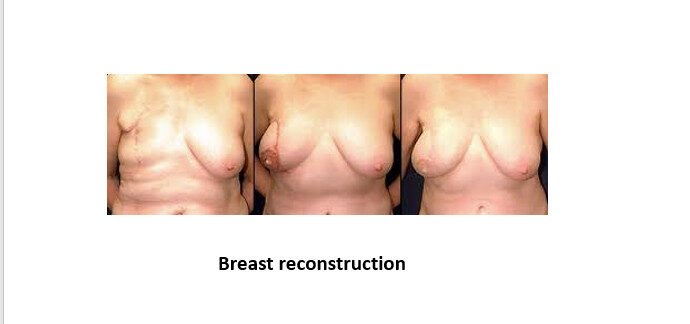
After mastectomy, the breast can be reconstructed through breast reconstruction surgery.
This surgery rebuilds the breast mound to resemble the size and shape of the natural breast before removal.
Join Our WhatsApp Groups!
Are you a nursing or midwifery student looking for a space to connect, ask questions, share notes, and learn from peers?
Join our WhatsApp discussion groups today!
Join Now
We are a supportive platform dedicated to empowering student nurses and midwives through quality educational resources, career guidance, and a vibrant community. Join us to connect, learn, and grow in your healthcare journey
Quick Links
Our Courses
Legal / Policies
Get in Touch
(+256) 790 036 252
(+256) 748 324 644
Info@nursesonlinediscussion.com
Kampala ,Uganda
© 2026 Nurses online discussion. All Rights Reserved