
Introduction to Midwifery
Oral Candidiasis (Thrush) in Newborns
Table of Contents
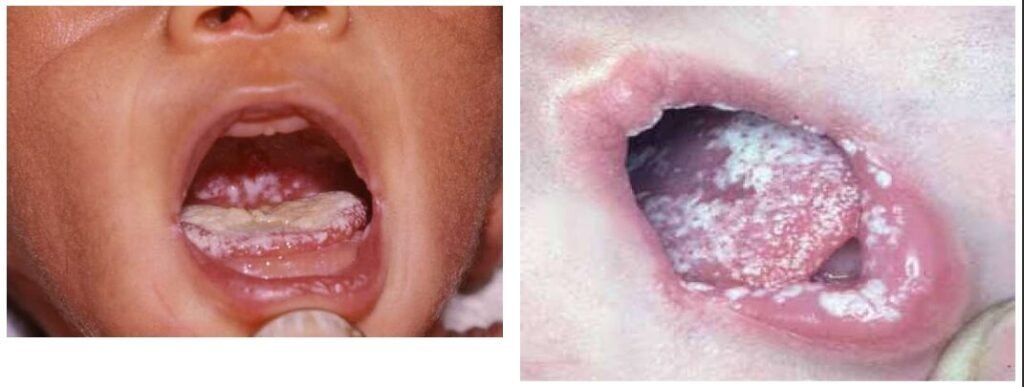
Definition
Oral candidiasis, commonly known as thrush, is a fungal infection of the mucous membranes of the mouth caused by Candida albicans, most commonly. Oral candidiasis is a common fungal infection in newborns, characterized by the presence of Candida species, primarily C. albicans, on the oral mucosa. The infection can range from mild, with only a few white patches, to severe, involving extensive involvement of the oral mucosa and sometimes extending to the esophagus (esophageal candidiasis). The infection thrives in moist environments and can spread rapidly if not treated effectively.
Causes and Predisposing Factors Workflow
Transmission and Risk Factors
- Transmission: The most common route of transmission is vertical transmission from the mother during vaginal delivery, although it can also occur from contaminated surfaces or individuals handling the newborn.
- Immature Immune System: Newborns have underdeveloped immune systems, rendering them more susceptible to infections like candidiasis.
- Antibiotic Use: Maternal or neonatal antibiotic use disrupts the normal balance of the oral flora, allowing Candida to overgrow.
- Premature Birth: Premature infants are particularly at risk due to their increased susceptibility to infections and often require prolonged hospitalization, increasing their exposure to pathogens.
- Immunodeficiency: Underlying immunodeficiencies in the newborn can increase their vulnerability to Candida infection.
- Prolonged Hospitalization: Hospitalized infants have increased exposure to Candida through various routes.
- Low Birth Weight: Low birth weight infants tend to have a higher risk of developing oral thrush.
- Use of Steroids: Corticosteroid use increases the risk of fungal infections.
- Poor Hygiene: Inadequate hygiene practices during feeding or handling can increase transmission risk.
- Diabetes Mellitus: Maternal diabetes increases the likelihood of neonatal candidiasis.
Presentation Workflow
Clinical Signs
- White Patches: The hallmark sign is the presence of creamy white patches or plaques on the tongue, buccal mucosa, palate, and gums. These plaques may be easily wiped off initially, leaving a slightly reddened underlying surface. In severe cases, the plaques become thick and adherent.
- Erythema: Underlying erythema (redness) may be present.
- Oral Pain: Infants may exhibit signs of oral discomfort, such as irritability during feeding, refusal to feed, or difficulty sucking.
- Fissuring: In severe cases, fissuring (cracking) of the oral mucosa may occur.
- Bleeding: Gently wiping the plaques may cause mild bleeding.
- Possible Esophageal Involvement: In severe cases, the infection may spread to the esophagus, causing difficulty swallowing (odynophagia) and feeding difficulties.
Management Workflow
Aims of Management
- Eradicate the Candida infection.
- Alleviate symptoms (pain, discomfort).
- Prevent complications (esophageal candidiasis, systemic infection).
- Prevent recurrence.
Maternity Centre (Initial Management)
- Clinical Examination: Thoroughly examine the infant’s oral cavity for the characteristic white plaques.
- Documentation: Record detailed observations and findings in the infant’s medical record.
- Hygiene Measures: Advise the mother on meticulous hygiene practices, including handwashing before handling the infant and cleaning the infant’s feeding equipment.
Infection Control
- Isolation: Isolate the affected infant to prevent the spread of infection to other newborns. This includes dedicated equipment and minimizing contact with other infants.
Treatment Options
Gentian Violet
- Preparation: Prepare a 1% solution of gentian violet in water.
- Application: Apply the gentian violet solution three times daily to the affected areas. Avoid using forceps inside the infant’s mouth. Instead:
- Method 1: Place a few drops onto a clean teaspoon and allow the infant to suck gently.
- Method 2: Wrap a small piece of sterile gauze around a clean finger, dip it into the gentian violet solution, and gently paint the lesions.
- Frequency: Continue treatment until the white patches disappear. Close monitoring is crucial.
- Sterilization: Boil all instruments and bowls used before and after each application. Store them separately.
- Hygiene: Practitioners must wash their hands thoroughly before and after handling the infant. Infected infant’s clothing should be soaked in a suitable disinfectant (e.g., Hibitane) before laundering.
Nystatin Oral Suspension
- Dosage: Administer 1 ml of nystatin oral suspension after each feed and before bedtime. Doubling the dose may be considered in older children.
- Application: Gently paint the solution onto the lesions using a small cotton swab dipped into a small amount of solution taken from the bottle cap. Shake the bottle well before each use.
- Frequency: Repeat this treatment after each meal and before bedtime for two weeks.
- Follow-up: If the patches persist after two weeks of treatment, seek immediate medical attention.
Monitoring and Referral
- Daily Examination: Examine the infant’s mouth daily before applying any treatment.
- Referral: Refer the infant to a hospital for further management if:
- The infection is severe or extensive.
- The infant shows signs of significant distress (e.g., feeding difficulties, irritability).
- Treatment is ineffective after a reasonable trial (at least 2 weeks).
- There is suspicion of esophageal involvement.
Hospital Management
- Diagnosis Confirmation: Microscopic examination (KOH prep) of a sample from the oral lesion can confirm the diagnosis.
- Treatment: The most common treatment is the topical application of antifungal medication. Nystatin oral suspension is usually the first line of treatment. Other antifungal agents like clotrimazole oral suspension or gel may also be used. The duration of treatment and dosage are determined by the physician.
- Systemic Therapy: Systemic antifungal therapy (e.g., fluconazole) is reserved for severe cases (e.g., esophageal candidiasis, immunocompromised infants), usually administered intravenously.
Nursing Care Workflow
Hygiene
- Top-to-Toe Cleaning: Perform thorough top-to-toe cleaning of the infant, paying particular attention to the diaper area.
- Tepid Sponging: Administer tepid sponging if the infant develops a fever.
- Position Changes: Change the infant’s position every two hours to prevent pressure sores.
- Linen Changes: Change soiled linen immediately and disinfect it properly.
- Oral Hygiene: Gently wipe the infant’s mouth with a clean, soft cloth or gauze after each feeding. Avoid harsh scrubbing.
- Pain Management: Provide comfort measures like frequent feeding with appropriate feeding methods (e.g., if breastfeeding, correct latch).
Nutritional Support
- Breastfeeding: Encourage breastfeeding whenever possible, as breast milk provides protective antibodies and facilitates healing.
- Nasogastric Tube Feeding: If breastfeeding is not possible due to the infant’s inability to suck, consider using a nasogastric tube to administer expressed breast milk (EBM).
Monitoring
- Elimination: Monitor the infant’s bowel and bladder function regularly.
- Vital Signs: Monitor temperature, pulse, and respiration at least twice daily.
- Clinical Assessment: Regularly assess the infant’s clinical condition for signs of improvement or deterioration.
Immunizations
Once the infant’s condition has improved, ensure that routine immunizations are administered according to the recommended schedule.
Prevention Workflow
Preventive Measures
- Treat Maternal Candidiasis: Effective treatment of vaginal candidiasis (moniliasis) in the mother is crucial to prevent transmission to the newborn.
- Regular Oral Inspection: Daily inspection of the infant’s oral cavity allows for early detection and prompt treatment.
- Isolation of Infected Infants: Immediate isolation of infected infants prevents the spread of infection to other newborns.
- Maternal Hygiene: Mothers should practice good hygiene during pregnancy and after delivery.
- Appropriate Antibiotic Use: Avoid unnecessary antibiotic use in both mother and infant.
- Breastfeeding: Breastfeeding is protective, offering antibodies and other factors that limit colonization.
- Proper Hygiene of Feeding Equipment: Thoroughly clean and sterilize feeding equipment (bottles, nipples).
Advice on Discharge Workflow
Discharge Instructions
- Educate parents on the importance of completing the prescribed antifungal regimen.
- Instruct parents on the signs and symptoms of recurrence.
- Teach parents how to maintain good oral hygiene practices.
- Advise on follow-up appointments.
Complications Workflow
Potential Complications
- Esophageal Candidiasis: Spread of infection to the esophagus causing feeding difficulties and pain.
- Systemic Candidiasis: In immunocompromised infants, the infection may disseminate to other organs, leading to severe systemic illness.
- Superinfection: Other infections may occur secondary to altered oral flora.
- Malnutrition: Prolonged thrush can interfere with adequate feeding and lead to malnutrition.
Join Our WhatsApp Groups!
Are you a nursing or midwifery student looking for a space to connect, ask questions, share notes, and learn from peers?
Join our WhatsApp discussion groups today!
Join Now
We are a supportive platform dedicated to empowering student nurses and midwives through quality educational resources, career guidance, and a vibrant community. Join us to connect, learn, and grow in your healthcare journey
Quick Links
Our Courses
Legal / Policies
Get in Touch
(+256) 790 036 252
(+256) 748 324 644
Info@nursesonlinediscussion.com
Kampala ,Uganda
© 2026 Nurses online discussion. All Rights Reserved